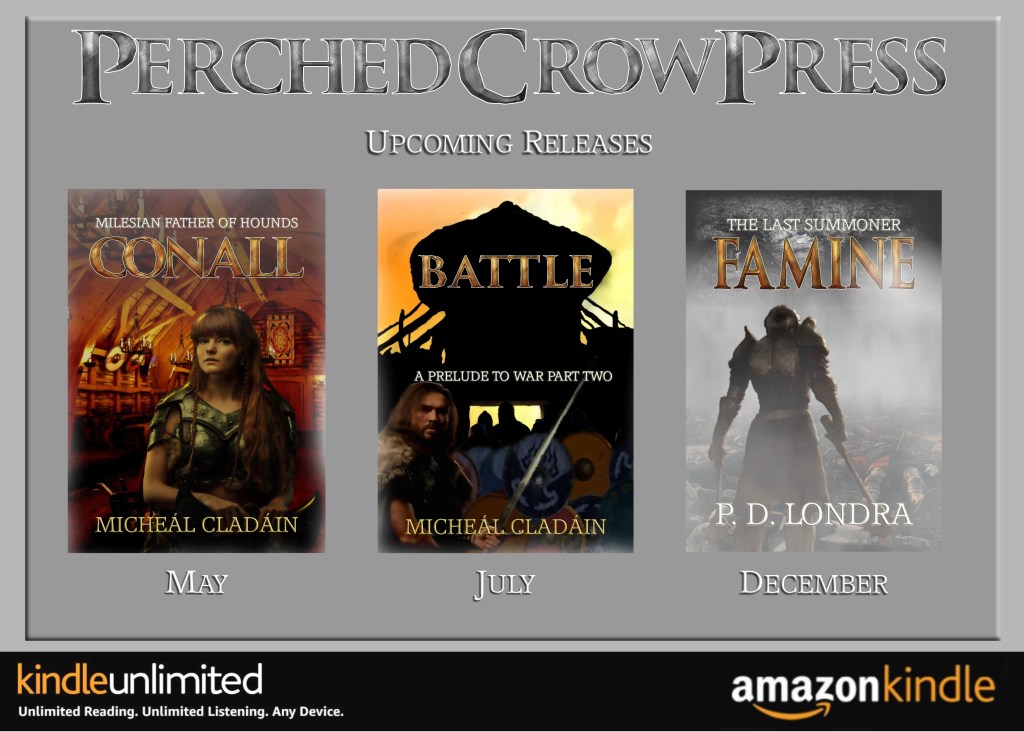
This year is going to be an exciting one for our planned releases:
Publishing Services
This year is going to be an exciting one for our planned releases:

I GOT LOST IN A BOOK
“I thought this story was wonderfully narrated. At times it felt like I was watching a movie rather than reading a book.”
“I think this book would certainly appeal to those who like historical crime fiction. It was certainly a good read and one I enjoyed very much.”
OH LOOK, ANOTHER BOOK!
“I thought the author really brought this era back to life, and I thoroughly enjoyed every minute of this book.”
“If you are looking for a fast-paced crime thriller then this novel will be right up your street.”
THE BOOK BANDIT’S LIBRARY
“This novel is everything that a historical mystery should be.”
“I am really looking forward to reading more books by this very talented author.”
A THOUSAND SUNS
“The non-stop action in this book was utterly compelling from beginning to end.”
“I thoroughly enjoyed every minute of this novel and I am sure you will too.”

Scrolling through FB for five minutes this morning, I came across no less than four ads offering support for generating AI novels and getting them published via Amazon. One even claimed to provide tools for writing and publishing at least one book daily. Many of my colleagues fear AI will replace us—as born out by the article in the Guardian, November 19th, about HarperCollins selling their back catalogue to a multinational big data concern so they can train AI models how to write. I can think of only one reason publishers would become involved in training AI: to reduce costs by removing writers from the production cycle. However, that is not an overnight transition.
What was an overnight transition was that wannabe fast-buck makers flooded the market with so much dross that readers could not trust sellers like Amazon and stopped buying from all but “trusted” suppliers, which are the same suppliers now providing back catalogues to AI modellers. When publishing a book via Amazon, there is a checkbox to indicate whether anything included in the book was AI-generated, including editing, text, graphics, and translation. They do not, however, make the information public—or if they do, no one is using AI, or at least not admitting to it.
So, what does it all mean?
It will still take some time before AI will be able to seamlessly mimic human writers, if ever. In the meantime, there will be a flood of low-quality content that will overshadow the works of human professionals. The flood will lead to a decline in the overall quality of literature available to readers. Publishers will continue to pay writers until they can replace us with robots, but it will become ever more difficult for new writers to get a publishing deal. Indie publishers like PerchedCrowPress face an ever-increasing gradient because of a lack of trust from buyers. There is already an overriding belief that Indie is equal to bad quality, which could not be wider of the mark. Imagine how a wave of low-quality content hiding behind an indie barrier will erode what little trust might remain.
So, what can we do about it?
The onus is on companies like Amazon to enforce rules about disclosing AI-generated content and publicise this information on their platforms. Some may argue that enforcement would be difficult, but it wouldn’t be. A simple program similar to those used to detect plagiarism may suffice. Issuing penalties to publishers who fail to disclose their use of AI could also discourage this practice. However, we understand that companies like Amazon are unlikely to regulate anything they see as a future revenue source. As writers, our hope lies in legislative bodies compelling them to enforce transparency in the content they sell.
Okay, so those offering tools making it possible to publish a novel a day are conning the susceptible. Quickly generating content is possible, but packaging and publishing a book takes much longer.
Packaging a book, including formatting, creating covers (even with AI-generated images), and writing a blurb takes time. Some will be faster than others, but it is longer than a day. When producing a book, I always allow two weeks in the plan for packaging.
Publishing also takes more than a day. Amazon cites 72 hours from when you hit the Publish button to when it becomes available, and sometimes it takes longer. Admittedly, it can be quicker, but with the thirty books I have published, the average is about 36 hours.
However, the susceptible will not realise that until they try it. By then, they are as likely to publish poorly packaged content as they are to publish the content itself, exacerbating the problem.
So, suppose legislators want to avoid the scenario where people are reading only AI-generated content; they must be discerning in their choices and support initiatives that promote human creativity in literature, if not stemming the flow of AI-generated literature, at least making its presence transparent.

The Iron Between trilogy follows the career of Agricola, the famed Roman General and Governor, from the outset of the Boudiccan uprising through the Year of the Four Emperors to the conquest of Druid Island (Anglesey). The author’s attention to historical accuracy will immerse you in first-century Romano Britain and Ireland.
Follow the intrepid leader through trials of love and war as he battles demons within and without. In a narrative that is both gripping and emotionally resonant, watch him as he falls in love with a Celta Druidess and risks losing his head to save her. Listen as he stands on the rise above the port of Caer Gybi and tells the world he will conquer Hibernia with a single legion and auxiliaries.
What the Critics Say
Reviewing Iron, Kirkus hailed Hammer, the preceding volume, as: “Agricola was the hero of the thrilling military climax of the preceding volume, Hammer (2023)—each book is satisfying on its own, there’s a rewarding sense of momentum in reading them in order.”
Renowned Irish author John De Burca called Hammer as “…hugely enjoyable.” Renowned historical novelist Cathie Dunn called Hammer a “…riveting read.” Renowned historical novelist Lissa Oliver wrote about Hammer, “I really enjoyed this book.”
Kirkus wrote about Iron, “The author is clearly in his element bringing to life this tense world in which ‘the gap between living and dying was no more than two hand spans.’”
Anvil — the grand finale to The Iron Between trilogy.
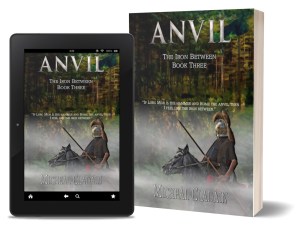
It’s the year CE 77. Vespasian names Agricola as governor of Britannia.
Upon his arrival, Agricola learns of an Ordovician assault orchestrated by his nemesis, Luchar. A cavalry outpost lies in ruins, and the sons of Rome’s senators have been mercilessly slaughtered. Memories of a similar tragedy flood Agricola’s thoughts, as he recalls the brutal murder of his friend Quintus at the hands of the same Celta warrior. Fueled by a thirst for vengeance, Agricola launches a relentless campaign to wipe out the Ordovician people, spearheading the conquest of Mona and beyond…
“The author is clearly in his element bringing to life this tense world in which ‘the gap between living and dying was no more than two hand spans.’” — Kirkus review of Iron, book 2 of The Iron Between trilogy.
The book is available for download at:
Zoom book launch of Anvil, January 15th, 19.00 GMT.
Hosted by acclaimed historical author, Katherine Mezzacappa.
Topic: Phil Hughes’s Personal Meeting Room
Join Zoom Meeting
https://us04web.zoom.us/j/2687158951?pwd=G0ULNCThlbimcuwhbtpOdsisGM0Koo.1
Meeting ID: 268 715 8951
Passcode: Wwue02
Abe was devastated after the Battle of Mag Iotha when Upthóg seized Lia Fáil and handed it over to Partholón’s demon messenger. Leaving the battlefield, he stole the legendary twin maces of the Undead Warrior, Abartach.
Now, as the shadow of civil war looms, Abe taps into the extraordinary power of the maces, only to discover that this newfound strength comes with harrowing consequences. His transformation into a nearly unstoppable force on the battlefield leads him to unintentionally wreak havoc, endangering both allies and enemies alike. Disturbed by this dark change, Abe turns to his stepfather for wisdom. Fearghal sends him south on a treacherous quest to seek the elusive aid of the seeress, Cassandra. With the spectre of Upthóg looming nearby, Abe sets off, determined yet wary of the dangers ahead.
Meanwhile, guided by the evil disciple Myddrin, Choca delves into the ancient arts that Partholón needs to awaken his disciples and unleash them upon the Five Kingdoms.
The intertwining of Abe and Choca’s destinies sets the stage for an epic showdown that will determine the fate of their realms. Prepare for a thrilling adventure brimming with heart-pounding action, enchanting magic, and the ultimate battle for salvation!
Note: The following is pre-publication prose and is subject to change.
The rider reined in his mount and gazed at Drombeg’s early morning activity from atop the knoll. He smiled at the sight of leanaí—the settlement young—helping with the morning chores; he smiled at the mothers preparing food at their outdoor cauldrons—food to break the fast of their loved ones. He was less inclined to smile at the swords across the knees of old warriors, swords they were rubbing with oil-soaked cloths, cleaning them in preparation for the coming war—a war the warriors had anticipated with a mixture of trepidation and excitement. A war their families had anticipated with fear—a war that was sure to signal the end of humankind.
A war the rider had done all in his power to prevent.
‘They’re a little on the old side,’ he said to his mare, patting her neck, which she acknowledged with a whinny and a toss of her mane.
Is that approval or disapproval?
Finally, he looked at the roundhouse where he grew up and spotted his mother beating a rug outside. He grinned at the memories the scene evoked, regretting his lapse last time he was here.
Time enough for regret, he thought as he dug his heels into his mount’s flanks and rode down the hill and through the settlement gates.
‘Good ta see ya, Captain,’ Donal, the gate guard, said as he rode past.
The rider nodded a greeting but said nothing, his mood on edge despite his smile at the sight of his mother. He’d been stressed since he rode from the Vale of Iotha with Abartach’s maces strapped to his saddlebags, one left and one right. He’d felt the weight of the monster’s weapons throughout his return to the settlement of his birth—unsure about his right to possess them. Riding away from the battlefield in front of Átha Cliáth’s walls had been the easiest thing he’d ever done. Easy because he’d felt her betrayal like a kick in the kidneys. Each time he closed his eyes to sleep, an image of the demon dragging the wagon carrying Lia Fáil away from the battlefield burnt the inside of his eyelids, reminding him of it. As such, he’d felt no guilt when he swung down from his horse to collect the maces from the discarded armour and weapons, all that remained of Balor’s Undead Horde. He’d been surprised at how light they were when he strapped them to his saddlebags. They’d looked so heavy, and the demon captain had been so strong. Far too strong for him. It was so strong that the rider was lucky to be alive if it could be called luck.
Their weight is the mental kind.
Despite its lack at Mag Iotha, the guilt had grown as he rode north, and with the guilt, the weight. When he reached Tayvir, he was ready to throw the Undead Captain’s clubs in the Big River. Something stopped him. It was that something that was now on his mind; a constant worry. The maces were tipped with shards of Lia Fáil and had power—power he didn’t understand and so feared, wondering if they controlled his actions.
Wondering if the dreams were coming from them.
I should have left them to her, a thought repeating like under chewed meat since he had ridden away from the battlefield. This was not the time to dwell on it but the time for overdue reunions.
He turned his mare to the right after passing through the gate. Their roundhouse was near the palisade just a little back from the rear entrance to the stables. As he drew rein, the rider wondered why he hadn’t stopped to greet his Ma last time he was in Drombeg. But then, those had been trying times, when Magón’s mouthpiece insulted him and ran for the feast hall as fast as he could. He wouldn’t be running anymore. Not unless he was somehow brought back from the dead.
‘Hello, Ma,’ he said.
The woman stopped whacking her rug and used the beater to shade her eyes for a better look.
‘Where’ve you been, boy?’ she asked.
‘It’s a long story.’
‘Aye, well, nothing better than a good long story. Fearghal will tend to the horse. Get yourself in beside the fire. I’ll be in shortly to give the gaimbín his oats.’
Grinning, Abe swung down from the saddle and led his horse to the stable. He thought that nothing would change his Ma. Sitting beside the fire and eating or drinking had always been her response to everything, even in high summer. Good news or bad, made no never mind. Sit by the fire and talk it through. He supposed it was a throwback from her years as a warrior when talking beside the firepit had been most of what they did, just with the occasional battle thrown in to break the monotony.
‘So, you’re still here,’ he said to the old man tending the plough horses in the large communal stables behind the settlement palisade.
‘Where else would I be, Abe? Out seeking infamy with those that oughtta know better?’
Abe laughed as he pulled Fearghal into a tight embrace. Patting him on the back, he could feel the wiry strength in the old man. Age hadn’t changed him much, apart from the wrinkles and lack of hair. He’d always been an outside man, so his skin was nut brown, making his sky-blue eyes stand out in his homely face. Fearghal stood a head shorter than Abe but was probably slightly broader in the beam. Even as an old man, Abe would welcome him in the shield wall, knowing he would be dependable.
‘Your ma know you’re here?’
‘Yes. I found her whacking that old rug.’
‘Aye, she does a lot of that lately. Reckon it takes her mind off the coming troubles. That or she’s thinking of her time as a warrior. Hard to say.’
‘How are you both? Really, I mean.’
‘We’re getting by. Like most these days. Heard Magón got hisself killed in Tayvir not so long back. Always too big for his helmet, that one.’
Abe couldn’t disagree but said nothing about it, not yet. He would tell them when they were together. It was going to be a harrowing tale about their Chief’s demise—how Lugh of the Long Arm led him like a donkey on a leather-plaited rope and how he died because of it, stabbed in the back by Gurk. All the machinations of a mischievous Tuatha—a race his parents did not believe existed. Abe, too, used to be a non believer.
Now I know better.
Instead, he asked, ‘Who has taken over as Chief?’
‘There’s no one here, boy. The young warriors all went to war with Magón. He rode out, promising fame and riches, and they all followed like mares after a stallion. Ain’t seen them since. Only the unworthy were left—’
‘I wouldn’t call you unworthy,’ Abe interrupted.
‘Unworthy or no, I’ve enough on me platter without caring fer this settlement of amadáin and gaimbíní. Besides, I’ve not been a warrior for twenty summers.’
Abe frowned at the plough horses as he led his mare to a stall. He’d always disagreed with the custom that Chieftains had to come from the warrior caste. It made sense to have a strong leader in some ways, but Abe would vote for a clever one every time. In his experience, up to the point where they no longer counted—the point when violence couldn’t be avoided—good sense and sagacity invariably beat muscles and a sharp sword.
‘What of the warriors I saw cleaning their weapons?’ he said.
‘Aye. Sad, no. The old and unwanted. Those Magón refused to take. Not a leader among ’em.’
‘So, who’s running things?’
Fearghal shrugged as he forked dried grass into the feeding trough. ‘Truth be told, there was never much need except for disputes. There ain’t been any of those since the young bloods followed Magón. Come, there’ll be time enough to talk while we break our fast. Reckon your Ma’s waiting for us. I’ll settle your mare and follow you.’
Agreeing, Abe handed Fearghal the reins and squeezed his shoulder before heading to the roundhouse. He found his mother leaning over the cauldron, stirring the contents. Stopping in the doorway, he watched her for a moment, studiously looking at the food with her tongue poking out from the corner of her mouth. The sight brought back his younger days.
‘It is good to see you, Ma,’ he said as he sat at the rough table, hoping her cooking had improved in the moon cycles he’d been away.
His mother didn’t respond immediately but watched him for a few moments. Eventually, she said, ‘You look tired, son.’
‘I’ve not been sleeping too well of late,’ he admitted with a half smile.
‘That ain’t good. A man needs his sleep.’
‘I know, Ma. Believe me, I know.’
‘Where’ve you been, Abe? Last I saw of you; you were riding for Caer Scál on an errand for Magón.’
‘Aye, well, the errand became a quest—like I said, a long story.’ And I was so distraught last time I came, I forgot to stop and say hello. ‘Let’s wait for Fearghal. I don’t have the energy to explain it twice.’
She agreed, and they sat in silence until Fearghal came in. Abe wasn’t sure but thought his stepfather had a pensive expression. After washing in the water bucket, the old man sat opposite Abe and accepted a bowl of oats and mutton with a nod of thanks.
‘You want to wait ’til we’ve finished eating?’ he asked Abe.
‘It’s a long story. If you don’t object, I’ll tell it eating.’
Neither objected and listened as Abe told a tale of war and monsters, murder and mayhem. The most reaction he got when describing the arena under The Point of Death was a grimace from Fearghal when he said the demon had split Maga in two from crown to crotch and took Fachta’s legs off at the waist. Fearghal threw his spoon into his bowl in disgust when Abe mentioned the witch betraying her brother. The old man whistled when Abe described his fight with the Tuatha monster, Abartach. His mother squeezed his hand when he told them of his combat with Mac Da Tho and how he’d decided to yield when he got a surge of unexplained power. Both of them were interested in the logistics of the Battle of Mag Iotha and asked for clarification at different times during his description. Eventually, he reached the point in his story when the witch gave Lia Fáil to Partholón’s demon. His mother patted his hand as he told how he rode away without a backward glance, anger coursing through his veins like the molten rivers under the Fiery Mountain.
‘The stone will give Partholón the power—the draíocht—to release his demons. The Five Kingdoms no longer have the strength to face them. We lost too many fighting the undead at Caisel and Mag Iotha. This demon war will be the one to end all wars.’
‘And you believe this story of a scourge?’ his ma asked.
‘If you’d been there and seen those disciples in The Point of Death, you wouldn’t be asking.’
‘They’re just the stories I used to tell you as a child.’
‘I know, Ma. You won’t believe how many times I said the same thing over the last few moon cycles.’
‘You think this demon war will come here?’ Fearghal asked.
‘Yes. Nowhere’s going to be safe, old man.’
‘We can hide in the forest until it’s over,’ his ma said.
Abe was unsure how to tell her there would be no hiding from what was coming. The Tuatha witch had guaranteed their entry into an age of darkness where the Giant would reign. With the witch’s actions, it was only a matter of time.
‘Where did you come by them maces?’
‘I took them from the field at Mag Iotha,’ Abe said, staring at the cauldron.
‘There’s something about ’em. They feel wrong, somehow.’
‘They belonged to the Undead Captain, who made them using shards from Lia Fáil. They are full of Earth Power. They worry me, in truth.’
‘That explains much. I felt the malice in ‘em when I took yer bags off the mare. My advice, get rid of ‘em.’
‘Don’t think I haven’t tried,’ Abe mumbled into his oats.
‘What does that mean?’
‘I tried to throw them in the Big River. It was like trying to throw away an arm. This will sound foolish, but I think they’ve claimed me somehow.’
‘I’ll bury ‘em in the forest,’ Fearghal said before spooning cold oats into his mouth.
Abe nodded, realising it was a sensible solution. He suspected his stepfather wouldn’t be as plagued by the addiction of the maces, not having been a part of the battle which saw them dropped by Abartach.
‘Thanks, old man.’
Fearghal was about to answer, but a sudden noise broke out. It sounded like the demon war had already arrived, which Abe knew was impossible.
‘It’s coming from Main Square,’ his ma said.
‘Let’s go see what all the commotion’s about,’ Fearghal said, pushing himself to his feet.
‘I’ll get my sword,’ Abe said as he stood.
‘No need,’ Fearghal said. ‘It’s loud, but I don’t hear any animosity.’
When they arrived at the square, they found the way blocked by everyone crowding the space, pushing and jostling to get closer to the steps leading up to the feast hall doors. Abe didn’t think he’d ever seen so many of Drombeg’s people crowded into one place at one time. Even the hostel during feast days like Imbolc and Samhain wasn’t this crowded. Together, Fearghal and Abe forced a path through the throng, Abe’s ma close behind. After much shoving and cajoling, they reached the feast hall and pushed in through the open doors.
As usual at this time of day, the inside was gloomy, the braziers and firepit not yet lit. When his eyes had adjusted, Abe could see several of the old warriors he’d noticed cleaning their weapons when he arrived, crowded around a man in a dusty cloak. They were all talking at once, the cacophony so intense that it was impossible to distinguish words from the general noise.
‘What’s this all about?’ Abe asked.
Fearghal shrugged and shook his head to indicate he couldn’t hear. Holding up a finger, he took the hunting horn from above the door and blew a long, hard note, which echoed through the hall, making Abe’s ears ache.
The reaction was immediate. The old warriors stopped their clamour and turned towards the door in outrage.
‘What’s going on here?’ Fearghal asked, not giving any of them time to voice their annoyance.
They all spoke at once, making their words once more unintelligible. Fearghal blew another note—something that should be banned in confined spaces, and the warriors quieted again.
‘Dealgán, you tell me,’ Abe said to the man in the cloak.
‘Connavar’s dead.’
‘The King’s dead?’ Abe asked, more because he needed time to think than because he needed an answer. Connavar’s demise came as no surprise. The last time Abe saw him, the man had been listening to Magón’s advice while dribbling on his chin. ‘So, why are you here?’
‘There’s to be a Bull Feast. The council sent messengers to all the settlements to call for candidates. We need a new king.’
I was not surprised to learn that the Scandinavians had a presence in Britain long before the infamous Lindisfarne raid of CE793 (The Guardian, Jan 1st, 2025). The discovery of remains in York, believed to be of a Scandinavian gladiator or legionary, dating back to CE100 to CE300, suggests a much earlier migration than previously thought.
It’s time to debunk the myth that Vikings (raiders) lacked the means to cross the open sea before the Lindisfarne raid. The truth is, they could have easily sailed down the mainland coast, reaching the English Channel and then Britain. The idea that they only began raiding the West when they developed a rudimentary compass is just a misconception. The reality is, they were always capable of venturing West.
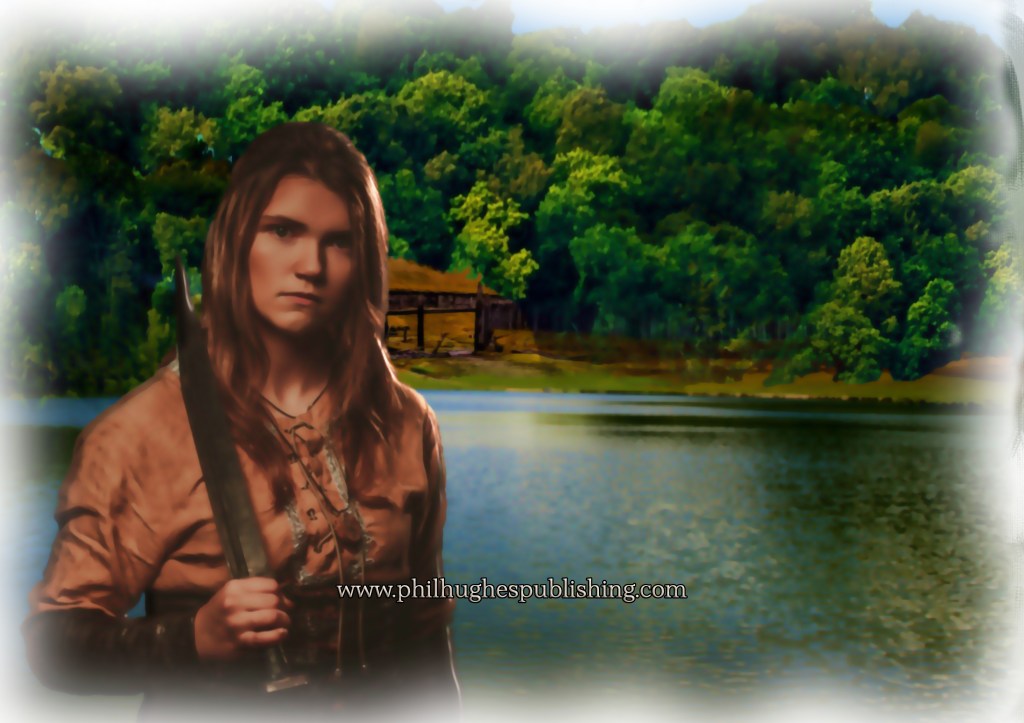
According to legend, before the Battle of Ros na Ríg, a significant event in Irish mythology, Conall Cernach went to Scandinavia to get support for the battle and returned at the head of an army, which fought on behalf of Conchobar Mac Nessa, the King of Ulster. This story is another example of the contradictory nature of the Irish Mythological cycles. Mac Nessa ran from the battle of Gáirech and would have been disgraced in the eyes of warriors like Conall. They had also fallen out before the Cattle Raid of Cooley to the extent that Conall defected to the opposing side—Ulster’s arch-enemy, Connacht. They might have reconciled after King Ailill killed Fergus. Still, for me, it is a real stretch. I think it is much more likely that Conall returned from Scandinavia at the head of an army destined to oppose Mac Nessa and not support him.
This provides an excellent premise for my latest venture into Irish mythology, Milesian Father of Hounds, which will be published in the summer of 2025.
I can’t remember exactly when I saw Snowdonia from the Wicklow Mountains. It began the kernel of an idea that simmered for years before I put it into motion. I’ve always questioned the belief that the Romans didn’t come to Ireland—they were the definition of an imperialist state. Why would they stop? The idea was further compounded when I read about the promontory fort on the Drumanagh headland. The naysayers repeat that no archaeological evidence supports a Roman invasion. Any battle would have left evidence behind, so the artefacts found at Drumanagh are evidence of trading with Romano-Britain. What if there were no battles? What if I came, I saw, I went is the quote we should attribute to Ireland?
In 2023, I embarked on the journey of turning that thought into a trilogy called The Iron Between. It was a labour of love. And now, the final book, Anvil, has been published, a culmination of years of dedication and passion.
As I saw this project, which had been brewing for so long, finally come to fruition, it was a truly magical moment.
Click the poster:

The Irish Basic Income for the Arts pilot scheme is coming to an end this year. Its purpose was to examine the impact of a basic salary on artists and creative arts workers. Monthly payments have been made to 2,000 eligible artists and creative arts workers selected at random.
The scheme was launched in 2022 by the then Taoiseach Micheál Martin, Tánaiste Leo Varadkar, and the Minister for Tourism, Culture, Arts, Gaeltacht, Sport and Media, Catherine Martin. The main objective of the scheme has been to address the financial instability faced by many working in the arts.
Such a scheme was the priority recommendation of the Arts and Culture Recovery Taskforce Life Worth Living Report, which was set up by Minister Catherine Martin in 2020 to examine how the sector could adapt and recover from the unprecedented damage arising from the COVID-19 pandemic.
Micheál Martin said, “Government is committed to supporting the arts and this initiative has the potential to be truly transformative in how Ireland supports the arts in the future. Ireland’s arts and culture in all its distinctiveness and variety is the well-spring of our identity as a people and is internationally recognised. The Basic Income for the Arts is a unique opportunity for us to support our artists and creatives in the sector and ensure that the arts thrive into the future.”
The pilot is due to end in August 2025. My personal opinion is that it would be a tragedy not to see the scheme rolled out on a more permanent basis.
I want to start with a short anecdote. I often describe myself as suffering from the “Van Gogh” syndrome. In addition to his world-renowned art, the Dutch post-impressionist was famous for not selling many paintings during his lifetime—he sold one and that to another artist. Art historians would agree that Vincent’s mental well-being was not good. Apart from our chosen medium and my possessing both ears, I often feel it’s possible to compare our journeys. I’m not sure my works will sell for millions post-mortem, but I am sure that my wife, Sally, would tell anyone who asked that I have become easier to live with since the advent of the BIA scheme. It’s fair to say that qualifying for the grant has improved Sally’s well-being as much as mine.
As writers, we know how difficult it is for most of us to earn a living from our work. On a personal level, the grant saved me from returning to a job I hated, eased my sense of being an impostor, allowed me to help others, and also let me raise my profile through non-paying work.
My mental well-being was one of the main drivers in taking up the figurative quill. When I began my creative journey in 2016, I’d spent over thirty gruelling years writing for and editing others—a job I didn’t enjoy. I would be understating the case if I said my work life was beginning to affect me negatively. It was already a dark time, having recently lost my first wife to MS in dramatic circumstances—to the point where I needed therapy for PTSD.
So, after leaving a documentation manager and editor position in a global Big Data company, I became a full-time novelist. My transition was made possible by the generous support of Sally, who was in gainful employment. However, immediately before the Arts Council announced the pilot scheme, Sally retired, putting me under pressure to return to a salaried job at the cost of my preferred career as a novelist. I fear that if I hadn’t qualified for the scheme, I would now be sitting at an IT industry desk describing Big Data theories in terms that Judy and Joe Bloggs would understand. Ironically, I would have been describing the same Big Data algorithms that contributed to the development of AI. As such, instead of happily creating adventures for my readers, I would be teaching data engineers how to plagiarise the work of my colleagues.
I don’t doubt that a lack of self-esteem is a common problem for struggling writers: that sense of “Can I even write?” I will never forget feeling elated when I read the email telling me I had qualified. There was the financial element, of course, but it was so much more than that. Before receiving the grant, I was constantly wondering whether I was kidding myself. Perhaps strangely, qualifying gave me a profound sense of validation in what I am doing—a feeling of belonging, if you will. It was as if the grant was a nod from the heavens, acknowledging my derring-do when choosing this career. Although not purely about the money, I suppose the elation was helped by not being driven to open my sales dashboard daily to see if I managed to sell any books in the last 24 hours.
Furthermore, when the pressure to produce paying work eased, it allowed me to expand my horizons by raising my profile and mentoring other writers. In April 2024, I started a non-paying web serialization on Royal Road and (at the time of writing) have had more than 130,000 reads. Although the web serial does not generate income directly, I have seen an increase in book sales since I began. I have also had time to guide other writers, helping with editing, formatting, artwork, and the procedures required to publish a book.
Of course, I would love to see the scheme continued, but how has it affected me in real terms? The following is a description of what I have achieved since I qualified for the grant.
As I have had more free time to help other writers, I opened my publishing house, PerchedCrowPress, to submissions from Irish writers of historical and fantasy fiction. Although I have reviewed several submissions, to date I have published two works by the same author, John De Búrca: The Last Five Swords and The Music of Swords.
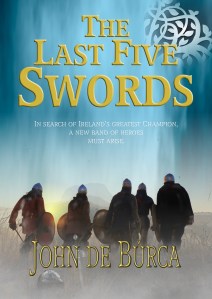
When Eoghan and Rúadhan find a girl up a tree, it heralds an epic journey. Rhíona is a Fae princess on a quest to find a hero. She is hunted by her father and his agents, ambassadors and assassins, all set on thwarting her plan. Running for their lives, the three soon fall in with Donnacha, an archer with a secret.
“Wonderful Irish fantasy storytelling by debut author, John de Búrca” — Conor Kostick, international bestselling author of Epic.
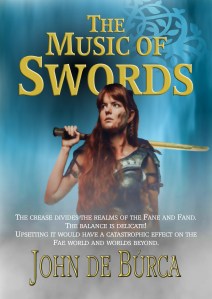
Eimear was born to the sound of violence. Her parents broke the ancient geis and fell in love, despite coming from different races. Murdered on the day Eimear is born, a knowing infant, their legacy is one of pain and loneliness. Although watched over by the duillecháns, Eimear’s childhood is unforgiving. She moves from one evil guardian to the next, that is, until she finds Sword and discovers its music. Sword’s discovery starts her on an epic adventure across multiple worlds–a journey of self-discovery and an introduction to further horrors.
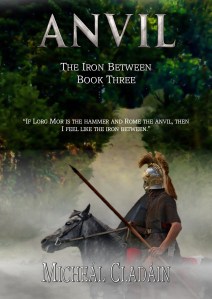
There has been much speculation over time about whether the Romans ever came to Ireland. There is very little archaeological evidence to support them ever being here. There is, however, an account by a contemporary of Agricola, Tacitus, that says they did come to Ireland, and there is evidence of a promontory fort at Drumanagh that supports it. Could the lack of any other evidence be because they came and then left soon afterwards? The Iron Between is a historical trilogy that examines the possibility.

I have also written a series of short stories based throughout Europe, the first two are published and more will arrive before the end of the pilot.
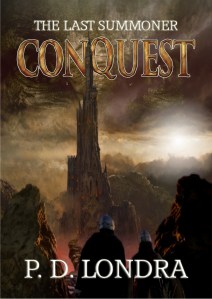
Humanity teeters on the edge of doom, as the malevolent disciples of Partholón: Conquest, War, Pestilence, and Death threaten to unleash chaos upon the Five Kingdoms. To fulfil their dark purpose, they seek a summoner and a witch. Enter Choca, the village troublemaker, unwittingly thrust into a perilous journey after a reckless act sets events in motion. With the help of Upthóg, a mysterious recluse, and pursued by a relentless Captain of Horse Warriors, Abe, Choca embarks on a treacherous quest southward in search of the enigmatic sage Myddrin.
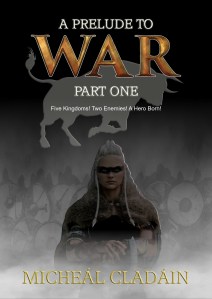
Ériu! In a bid for peace, Connery is crowned High King, but the Elder Council’s manipulations only invite war from an unexpected enemy. As chaos reigns and the peaceful king falls to invaders, the fate of the kingdoms hangs in the balance. Amidst the turmoil, Conor Mac Nessa, a masterful schemer, vies for the throne against the Warrior Queen, Medb of Connacht. Their fierce rivalry sets the stage for the emergence of Ériu’s greatest hero, the legendary Hound of Ulster.
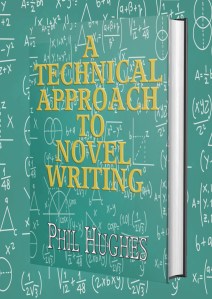
Having spent a lifetime writing in the technical space, I have what I think might be a unique way of writing a novel. At least, in all the books I have read on the subject, I’ve never seen anything remotely similar. A Technical Approach to Novel Writing documents my process.
None of this productivity would count for much if I was producing bad work. Here is some of the critical acclaim I have garnered over the period of the pilot.
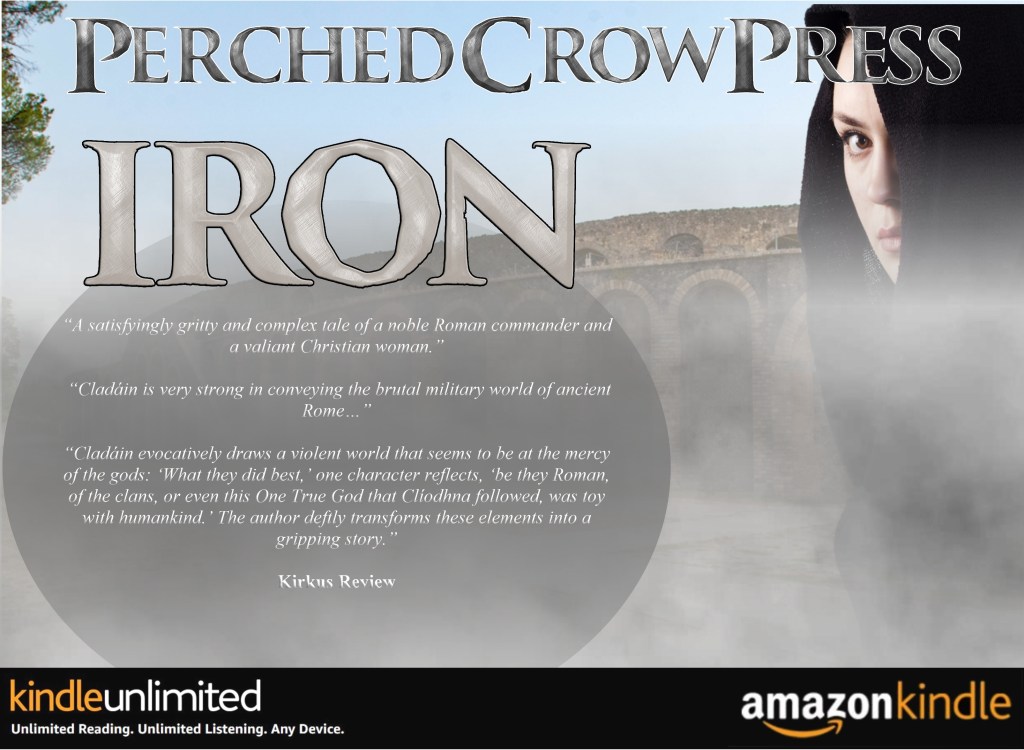
Read the full review here.
What can I say about the scheme other than that is has provided essential income, helped my mental well-being enormously, and allowed me to share my writing knowledge, which in turn has helped other authors? Without it, my creative journey would have come to an ignominious end, meaning the Arts Council achieved their primary goal with the scheme.
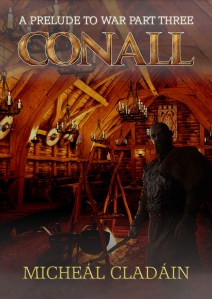
In a dramatic turn of events, the disgraced King Connavar Mac Nessa of Ulster storms back onto the scene, eager to reclaim his title as the ruler of Ériu’s mightiest kingdom. With the formidable Medb gone, Mac Nessa’s ambitions to ascend as the High King of the Five Kingdoms burn brighter than ever. He marks his return by swiftly placing a bounty on the head of his former champion, Conall.
Weary from his relentless battles against his former lord, Conall sets sail with Malthe, the heir apparent of Juteland. On the sacred grounds of Lindholm Høje, he swears a blood oath before the Jutí’s ancient ancestors, becoming the future king’s champion. As soon as Malthe dons the crown, they embark on a daring expedition to Germania to join the fierce Tuetons and Angles against the looming threat of the Roman legions.
In a clash that will echo through the ages, they engage in a breathtaking battle, annihilating two Roman legions and striking a significant blow against the empire. With victory at their backs, Conall and Malthe return to Lindholm, only to be met by Genonn, the druid, and Cúscraid Mend Macha, the son of Mac Nessa, whose urgent plea cannot be ignored. They implore Conall to rejoin the fight and rid the Five Kingdoms of the vile Mac Nessa once and for all.
The stage is set, and destiny beckons! Will Conall rise to the occasion and reclaim not just his honor but the future of Ériu itself? The time for action is now!

 PerchedCrowPress