Prologue
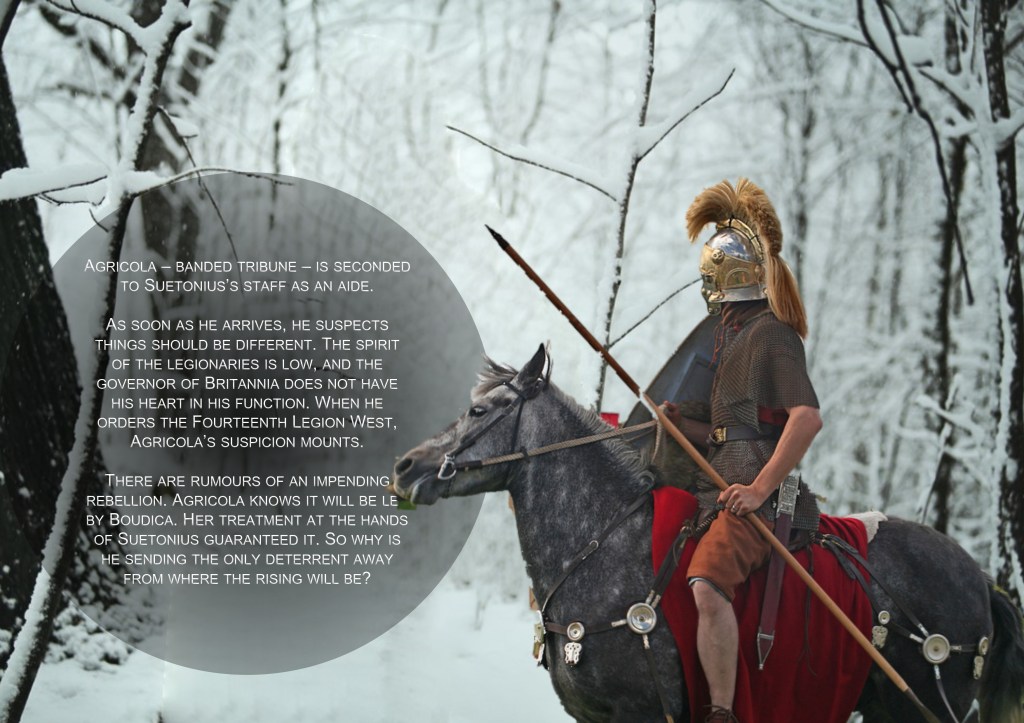
The air was cool in the pre-dawn grey. If not for the fog, it would have been a welcome release from the previous day’s clamminess. Despite the noise in the taberna, Agricola could hear the boatmen calling to each other as they landed supplies on the docks. He supposed the fog from the river Tamesis was making the sound carry, echoes of a wooden city coming to life.
Is it already dawn? Agricola asked himself, rubbing his hands over tired cheeks before studying his drinking companions.
The soldiers were as rowdy as only off-duty legionaries at their leisure could be. As the first cohort, they were not only hardened fighters but also hardened drinkers. Wine was still flowing, despite the late hour.
Early hour would be more accurate.
Now regretting it, Agricola had been defenceless against their calls as he rode through the palisade’s South Gate the previous night. A respected officer, the soldiers of the Fourteenth Legion did not begrudge him because he came from a different command – the Second.
Agricola did not put much stock in it. As a thinker, he knew it was only because he listened to them. Heard them. Stood behind them when the governor was ranting. Drank with them when they were off duty and called for him as he passed their taberna.
I need to be more aloof.
‘I must go,’ he said, downing his cup and standing. He was expected by the governor in Londinium to oversee the delivery of supplies for his command, the Legio XIV Gemina. There were whispers of an insurrection, and the governor was preparing in case the rumours held any truth.
Whispers of an insurrection. Why are soldiers of the first cohort even in Londinium?
‘Why are you here, um…’ Agricola asked.
‘Drinking, tribune, why else.’
‘No, I mean, why are you in Londinium.’
The aquilifer tapped his nose and laughed. ‘More than my position if I let that snake out of the sack, tribune.’
Agricola considered ordering the man to tell him the reason members of the first were in the city before realising the futility of such a course. The aquilifer — whatever his name might be — would laugh at him, and rightly so. As a banded tribune, Agricola had no authority over the legionaries. He was little more than the governor’s personal servant.
‘Come, Aurelio,’ he said to the praefectus of his turmae. ‘Duty is demanding my presence… our presence.’
‘The night is young,’ the aquilifer admonished, lifting the wine jug to pour more. Agricola put his hand over the cup and shook his head.
He could not remember the standard bearer’s name. It did not matter. He would never see him again unless it was in battle. Carrying the legion’s eagle, the man would be targeted. The Britons would strive to take the prize. Agricola knew the soldier would fight well. No one who gained the position of aquilifer ever fought badly. However, his life would probably be short, his end filled with agony and the shame of failure as some warrior of the tribes tore the eagle from his dying grasp.
‘The night is over, dolt. The governor is expecting us.’ Despite the insult, Agricola grinned and slapped the man on the back.
The aquilifer said something into his wine cup. Agricola heard the insult aimed at Gaius Suetonius Paulinus, governor of Britannia. Turning to Aurelio, he could see the praefectus was concentrating on a fight brewing at a nearby table and had not heard. He sighed in relief. It would not be necessary to order the standard bearer punished. He could not, however, let the legionary think it was acceptable to criticise his commander.
‘What did you say, soldier?’
‘Nothing, sir. I was thinking aloud,’ the aquilifer said, staring into his cup. Agricola frowned. It was not the first time he had heard the men of the Fourteenth voicing criticisms of their commander.
Is it the usual grumbling of soldiers, or is there more to it?
‘In my experience, it is best not to think when in your cups and in the company of senior officers. Crucifixion is often the fate of soldiers who think too much.’
The man held his peace and gulped at his wine, suddenly morose, as if he regretted spending time with a tribune. Agricola turned towards the exit nearest the stables under the palisade and gave the aquilifer no further thought. A sudden urge compelled him to use the latrine, so he turned to the rear door of the hostelry, ignoring the calls of the drunks who wanted him to join their table.
‘I will meet you by the stables,’ he said to Aurelio before heading out of the rear door.
Leaving the taberna, Agricola stopped in the swirling fog. He could not see the latrine trench from the doorway, only twenty paces or so from where he stood. Shivering, he tightened his cloak around his shoulders and made for the trench. He did not need to see where to go. He could smell the latrine, even when dampened by the density of the Tamesis’s morning offering.
He had just hung his spatha on the handrail when a voice asked, ‘Tribune Agricola?’
Reaching for the sword, Agricola glanced over his shoulder. A man in a black cloak with the hood up stood a short distance away, only just visible in the grey. Agricola could perceive no threat. If anything, the newcomer appeared bored rather than menacing.
‘Who are you?’ he asked, not releasing the spatha’s hilt.
‘You won’t need your weapon, sir. I come from Viroconium,’ the man said, throwing off his hood and revealing a gallea shining dully in the fog. ‘I am Lucius, bodyguard to Cerialis, sent as a messenger…’
The soldier hesitated.
‘Speak, man. What is your message?’
‘Mine is grave news, tribune…’
‘Spit it out. I will not bite you.’
The legionary thumped his chest, took off his helmet and ran a hand through damp hair. ‘A turmae patrolling on the western borders came under attack.’
‘Under attack?’ Agricola shook his head, unsure why the commander of the Ninth legion would send a messenger to Londinium with such news. Patrols were constantly under attack.
‘They were annihilated, sir. To a man. The attackers took everything. Horses. Weapons. Armour. Heads.’






 PerchedCrowPress