Chapter One: A Demon Messenger
Balor’s throne room was not the sweetest-smelling place. The King knew, sitting on his black onyx throne staring at the monstrous demon standing at the base of the dais, that he shouldn’t expect the scent of roses when his dominion was the land of the Undead—the land of the grey skins. Indeed, Balor didn’t expect much of anything. He hoped for revenge and had waited for it to be not just cold but ice-like in the serving—a millennium of waiting. Ever since Etercel’s descendent, Ruirech of The Great Forest, united the clans and forced Balor and his Fomorii underground in what became known as Balor’s Canyon, into the labyrinthine tunnels and holes with rivers of fire and untold power seeping from the clay of the tunnels’ beds. The tunnels they’d been trying to escape ever since.
Not quite true.
No. At first, they waited for a chance to escape but Ruirech’s Horse Warriors were ever vigilant. There were skirmishes that always seemed to be narrowly lost. Eventually, their waiting morphed into a belief that their time would never come, and with that, the apathy set in.
Has our time finally come? After so long?
Balor was unsure.
The King’s memory of Ruirech mercilessly driving them into the caves often made him wonder if the brat knew what lay in the tunnels. Had he known what waited for them within the sulphurous stench? The power was not only untold but also unwelcome. It created the horror of dying but not dying. They’d not been undead when they entered the caves. However, they didn’t age and transitioned from alive to undead, one by one. Something in the Earth Power of the labyrinth kept them animated and—if not exactly fresh—not rotting away to dust either.
With time, they realised what had happened. But it was only because they lost their appetite and thirst for life and started to ask about their seemingly perpetual youth. Eventually, their skin began to grey, and their lives became dry. Even love lost its appeal: emotional love because anger would not allow it; physical love because undead skin, grey and dry, would not allow it either. The Undead Horde then started dreaming of revenge—at least until the Tuatha-forsaken apathy set in. Now, Balor hoped there was a way forward that was more than a dream—a messenger from Partholón promising their salvation and the fulfilment of earlier dreams.
Salvation and revenge. But can the giant be trusted?
Balor stared at the demon, which stared back with black, fathomless eyes as dead as the King’s were undead. The haft of the axe rested on its shoulder, and it was girt for war. Being undead, the Fomorii were difficult to destroy, but splitting them from crown to crotch or legs from torso would do it. He had no idea how many the monster would turn to dust before they destroyed it, but he knew it would be costly. Hundreds might cease to be, including Balor, who was only a long stride away from the enormous, black-headed axe.
Would it be so bad after all these summers? If I reach for my ancient blade, it will destroy me. I could rest but would forfeit my people’s greatest desire. Revenge.
Finding that he was fidgeting with his crown, Balor put his hands on the wolf pup on his lap to keep them occupied. He always kept a pup because it gave him a way to touch life. Adult wolves could not abide him or his people. The pups seemed uncaring as though they were untouched by the prejudices of adulthood.
Did you hear me, King?
“I could hardly not hear you, demon as you are speaking in my head. I am pondering what you’ve told me.”
Do not ponder for too long, Balor. My Master has other avenues to explore.
“You came to me, axe on your shoulder, girt in iron as though prepared to force our allegiance. But let me tell you, even with that weapon, you would fall in the end, and my people would fight on until that eventuality. A promise you should remember when you threaten me, demon.”
I offered no threat, merely stated a fact. My Master has other places he can turn to.
“Your axe is a threat.”
My axe is for my protection, King. I will not use it unless provoked.
The King studied the beast for signs of subterfuge. It was hopeless. He might as well examine the rocks of his domain in search of the history of the Five Kingdoms.
“You say Partholón is proposing a truce. So, what are you telling me? Precisely, I mean.”
Humans are weak. There is famine and war. Their armies are spread thin, and there is no one to occupy the walls of their lofty forts.
“Why do we need you if the clans are weak?”
The humans are weak, not so the Tuatha. If you were to channel Earth Power to Partholón and we attacked together, even Danu’s people could not withstand us. Both our goals would be fulfilled.
“Both our goals? What exactly would your giant achieve?”
Partholón has long dreamt of an age of darkness. He abhors being released and then herded back into Tartarus like so much cattle. Together, we would be strong enough to defeat the Whitehead and her Spear Maidens here in Middle Kingdom, and then we could bring war to the humans. All of the humans.
Together, we would rule the Five Kingdoms in eternal darkness.
The King nodded and smiled at the demon. He was not as much of a gaimbín as the monster seemed to think, having heard similar tales before. Politicians were the same throughout history. It was never so simple as together we would. One always climbed to the top and claimed the throne, usually on the backs of those promised equality. Otherwise, what use was there of having a throne?
“Where is the Whitehead now?”
The Tuatha is in her fastness on the eastern edge of the Great Forest. It is vast and strong. Together, we could take it.
That is the best news so far.
“What will it take to unite us?”
With your Earth Power, Partholón could release the scourge. An army of demons and your Undead Horde would wreak havoc.
Balor watched the demon while he thought about Partholón’s offer. He didn’t believe the message. The demon’s horned head and dead eyes showed no emotion; it gave no clue what it thought, but that told the King nought. The monster would never show emotion. It was quite possible that feeling didn’t exist in its world. It stood completely still while waiting for Balor to speak as though frozen in time.
There are no nuances here.
Bábdíbir served its master and nothing more—nothing at least that Balor might understand. There was no doubt in Balor’s mind that the giant would use the Fomorii and then discard them, as King Ochall had before; may he rot in the pit.
He didn’t blame Partholón.
If the roles were reversed, that is what Balor would do. Not believing the promises didn’t change his predicament. He could not afford to antagonise the monster standing at the base of his dais. It might be emotionless but that didn’t mean it wouldn’t attack and swings of that axe would be deadly, regardless of any emotion behind them.
“Tell your master I will consider his proposal. Return after five nights, and I will give you my answer.”
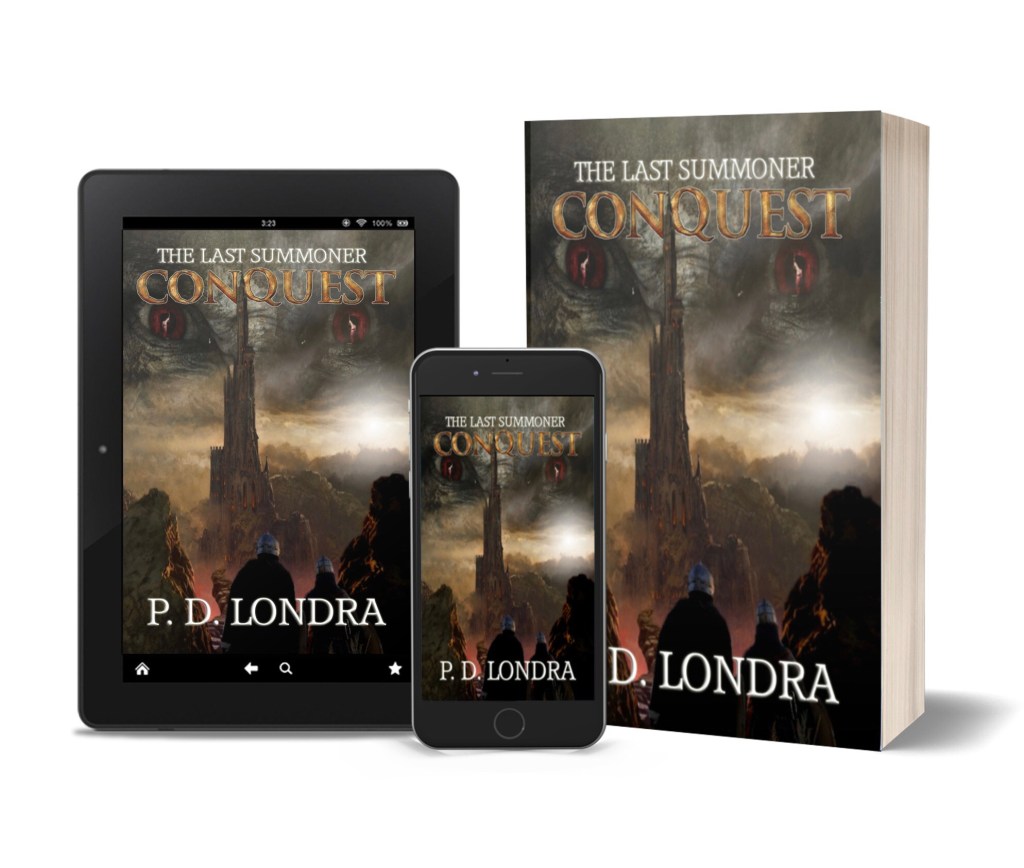
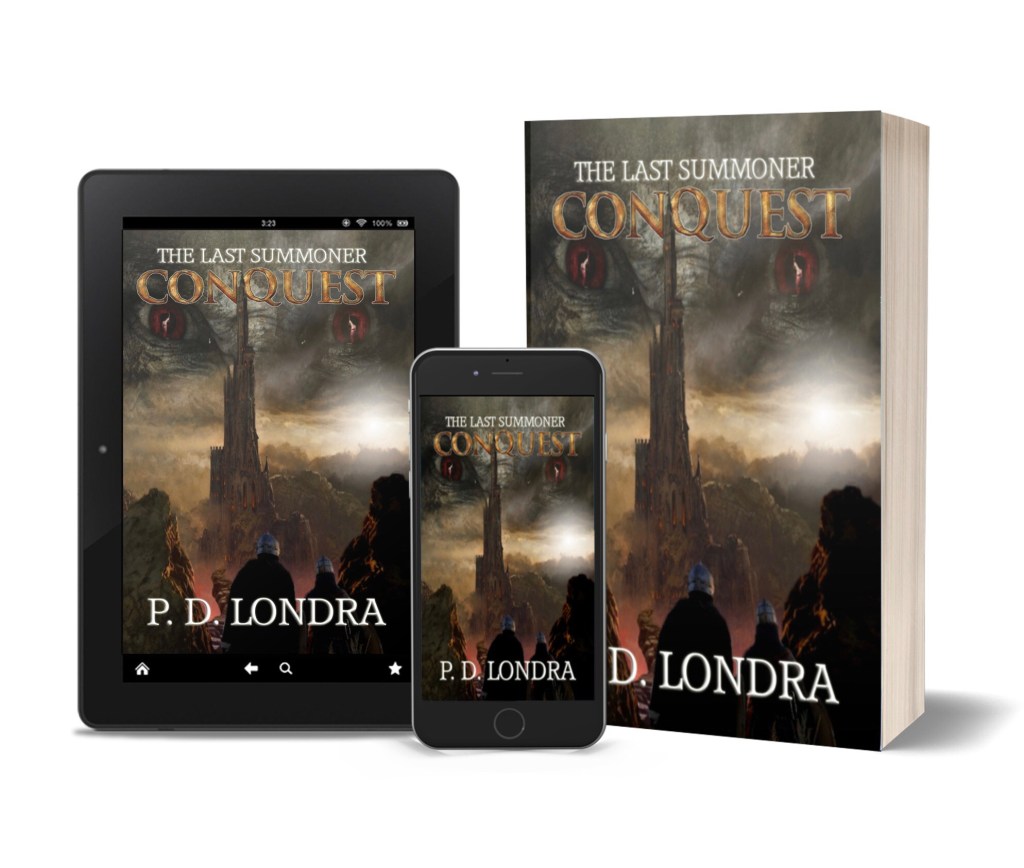
Available for pre-order.






 PerchedCrowPress