The Irish Basic Income for the Arts pilot scheme is coming to an end this year. Its purpose was to examine the impact of a basic salary on artists and creative arts workers. Monthly payments have been made to 2,000 eligible artists and creative arts workers selected at random.
The scheme was launched in 2022 by the then Taoiseach Micheál Martin, Tánaiste Leo Varadkar, and the Minister for Tourism, Culture, Arts, Gaeltacht, Sport and Media, Catherine Martin. The main objective of the scheme has been to address the financial instability faced by many working in the arts.
Such a scheme was the priority recommendation of the Arts and Culture Recovery Taskforce Life Worth Living Report, which was set up by Minister Catherine Martin in 2020 to examine how the sector could adapt and recover from the unprecedented damage arising from the COVID-19 pandemic.
Micheál Martin said, “Government is committed to supporting the arts and this initiative has the potential to be truly transformative in how Ireland supports the arts in the future. Ireland’s arts and culture in all its distinctiveness and variety is the well-spring of our identity as a people and is internationally recognised. The Basic Income for the Arts is a unique opportunity for us to support our artists and creatives in the sector and ensure that the arts thrive into the future.”
The pilot is due to end in August 2025. My personal opinion is that it would be a tragedy not to see the scheme rolled out on a more permanent basis.
How So?
I want to start with a short anecdote. I often describe myself as suffering from the “Van Gogh” syndrome. In addition to his world-renowned art, the Dutch post-impressionist was famous for not selling many paintings during his lifetime—he sold one and that to another artist. Art historians would agree that Vincent’s mental well-being was not good. Apart from our chosen medium and my possessing both ears, I often feel it’s possible to compare our journeys. I’m not sure my works will sell for millions post-mortem, but I am sure that my wife, Sally, would tell anyone who asked that I have become easier to live with since the advent of the BIA scheme. It’s fair to say that qualifying for the grant has improved Sally’s well-being as much as mine.
As writers, we know how difficult it is for most of us to earn a living from our work. On a personal level, the grant saved me from returning to a job I hated, eased my sense of being an impostor, allowed me to help others, and also let me raise my profile through non-paying work.
My mental well-being was one of the main drivers in taking up the figurative quill. When I began my creative journey in 2016, I’d spent over thirty gruelling years writing for and editing others—a job I didn’t enjoy. I would be understating the case if I said my work life was beginning to affect me negatively. It was already a dark time, having recently lost my first wife to MS in dramatic circumstances—to the point where I needed therapy for PTSD.
So, after leaving a documentation manager and editor position in a global Big Data company, I became a full-time novelist. My transition was made possible by the generous support of Sally, who was in gainful employment. However, immediately before the Arts Council announced the pilot scheme, Sally retired, putting me under pressure to return to a salaried job at the cost of my preferred career as a novelist. I fear that if I hadn’t qualified for the scheme, I would now be sitting at an IT industry desk describing Big Data theories in terms that Judy and Joe Bloggs would understand. Ironically, I would have been describing the same Big Data algorithms that contributed to the development of AI. As such, instead of happily creating adventures for my readers, I would be teaching data engineers how to plagiarise the work of my colleagues.
I don’t doubt that a lack of self-esteem is a common problem for struggling writers: that sense of “Can I even write?” I will never forget feeling elated when I read the email telling me I had qualified. There was the financial element, of course, but it was so much more than that. Before receiving the grant, I was constantly wondering whether I was kidding myself. Perhaps strangely, qualifying gave me a profound sense of validation in what I am doing—a feeling of belonging, if you will. It was as if the grant was a nod from the heavens, acknowledging my derring-do when choosing this career. Although not purely about the money, I suppose the elation was helped by not being driven to open my sales dashboard daily to see if I managed to sell any books in the last 24 hours.
Furthermore, when the pressure to produce paying work eased, it allowed me to expand my horizons by raising my profile and mentoring other writers. In April 2024, I started a non-paying web serialization on Royal Road and (at the time of writing) have had more than 130,000 reads. Although the web serial does not generate income directly, I have seen an increase in book sales since I began. I have also had time to guide other writers, helping with editing, formatting, artwork, and the procedures required to publish a book.
So, what have I produced…
Of course, I would love to see the scheme continued, but how has it affected me in real terms? The following is a description of what I have achieved since I qualified for the grant.
Publishing House
As I have had more free time to help other writers, I opened my publishing house, PerchedCrowPress, to submissions from Irish writers of historical and fantasy fiction. Although I have reviewed several submissions, to date I have published two works by the same author, John De Búrca: The Last Five Swords and The Music of Swords.
The Last Five Swords
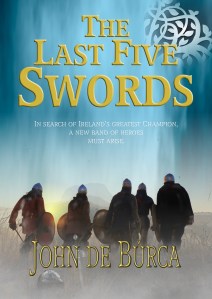
When Eoghan and Rúadhan find a girl up a tree, it heralds an epic journey. Rhíona is a Fae princess on a quest to find a hero. She is hunted by her father and his agents, ambassadors and assassins, all set on thwarting her plan. Running for their lives, the three soon fall in with Donnacha, an archer with a secret.
“Wonderful Irish fantasy storytelling by debut author, John de Búrca” — Conor Kostick, international bestselling author of Epic.
The Music of Swords
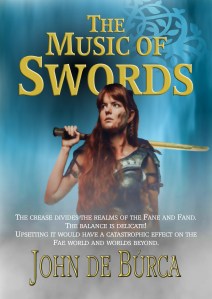
Eimear was born to the sound of violence. Her parents broke the ancient geis and fell in love, despite coming from different races. Murdered on the day Eimear is born, a knowing infant, their legacy is one of pain and loneliness. Although watched over by the duillecháns, Eimear’s childhood is unforgiving. She moves from one evil guardian to the next, that is, until she finds Sword and discovers its music. Sword’s discovery starts her on an epic adventure across multiple worlds–a journey of self-discovery and an introduction to further horrors.
The Iron Between
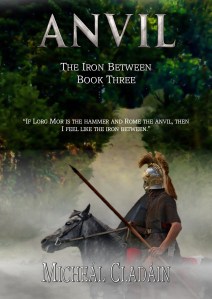
There has been much speculation over time about whether the Romans ever came to Ireland. There is very little archaeological evidence to support them ever being here. There is, however, an account by a contemporary of Agricola, Tacitus, that says they did come to Ireland, and there is evidence of a promontory fort at Drumanagh that supports it. Could the lack of any other evidence be because they came and then left soon afterwards? The Iron Between is a historical trilogy that examines the possibility.
Short Stories
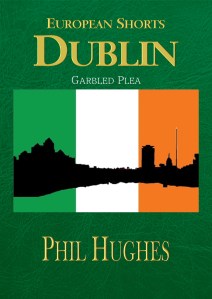
I have also written a series of short stories based throughout Europe, the first two are published and more will arrive before the end of the pilot.
The Last Summoner
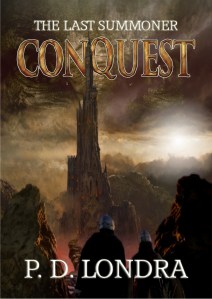
Humanity teeters on the edge of doom, as the malevolent disciples of Partholón: Conquest, War, Pestilence, and Death threaten to unleash chaos upon the Five Kingdoms. To fulfil their dark purpose, they seek a summoner and a witch. Enter Choca, the village troublemaker, unwittingly thrust into a perilous journey after a reckless act sets events in motion. With the help of Upthóg, a mysterious recluse, and pursued by a relentless Captain of Horse Warriors, Abe, Choca embarks on a treacherous quest southward in search of the enigmatic sage Myddrin.
Web Serialization
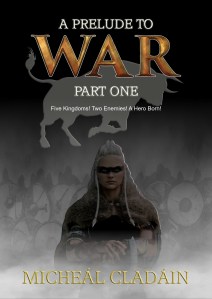
Ériu! In a bid for peace, Connery is crowned High King, but the Elder Council’s manipulations only invite war from an unexpected enemy. As chaos reigns and the peaceful king falls to invaders, the fate of the kingdoms hangs in the balance. Amidst the turmoil, Conor Mac Nessa, a masterful schemer, vies for the throne against the Warrior Queen, Medb of Connacht. Their fierce rivalry sets the stage for the emergence of Ériu’s greatest hero, the legendary Hound of Ulster.
Writing Guide
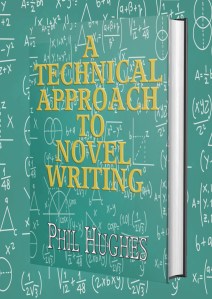
Having spent a lifetime writing in the technical space, I have what I think might be a unique way of writing a novel. At least, in all the books I have read on the subject, I’ve never seen anything remotely similar. A Technical Approach to Novel Writing documents my process.
Critical Acclaim
None of this productivity would count for much if I was producing bad work. Here is some of the critical acclaim I have garnered over the period of the pilot.
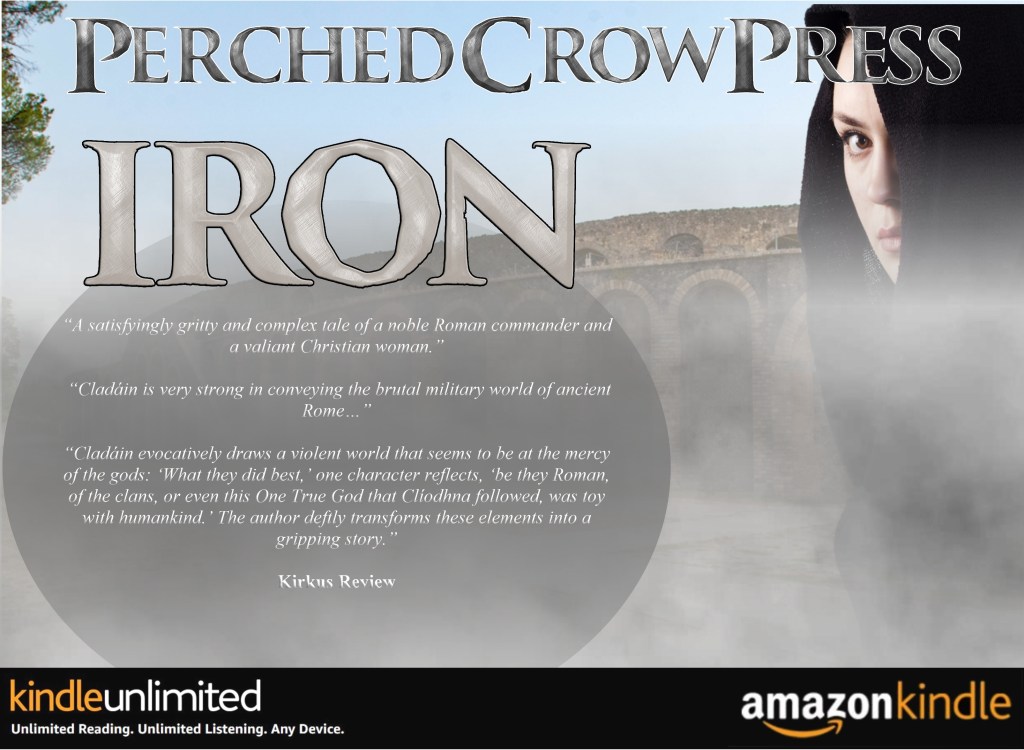
Read the full review here.
Summary
What can I say about the scheme other than that is has provided essential income, helped my mental well-being enormously, and allowed me to share my writing knowledge, which in turn has helped other authors? Without it, my creative journey would have come to an ignominious end, meaning the Arts Council achieved their primary goal with the scheme.
 PerchedCrowPress