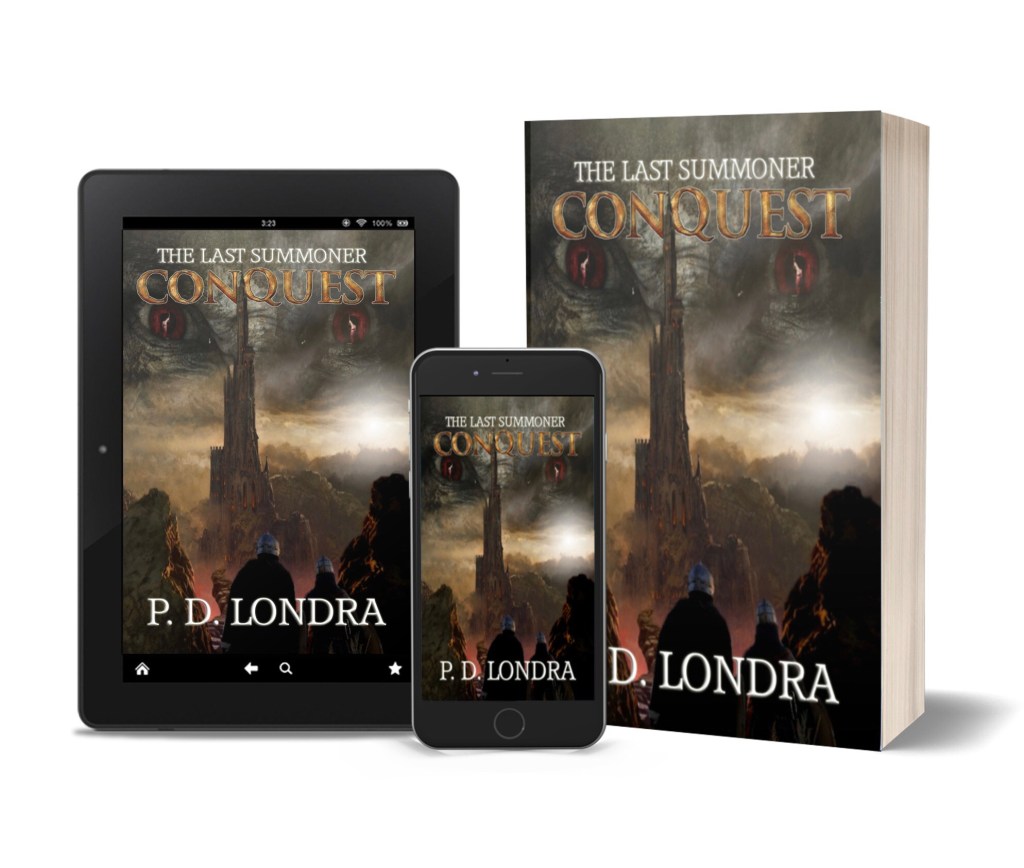
During the beta reading phase of The Last Summoner: Conquest, my readers raised several questions about aspects of the tale that they found confusing. Of course, some of the issues were editorial, and I fixed them for the release of the book by the Irish Indie publisher PerchedCrowPress on January 5, 2024 (available for pre-order at https://www.amazon.co.uk/dp/B0CM23F711). However, some were more fundamental, such as how I chose my character names.
It will be immediately apparent to some readers that I based The Last Summoner book series on Irish Celtic mythology. For those readers, most of the names will be familiar, if not all. However, Upthóg is Gaelic for witch or charm worker and not a heroine from Irish Celtic mythology. The same applies to The Four, whose names are Gaelic words that mean their position: Marbh means death, Concaire means conquest, Árchù means war, and Plasgorta is a construct of famine and pestilence. The other names come from Irish Celtic mythology.
So, that raises the question, “Why Irish Celtic mythology?”
It’s All About the Premise
The story’s basic premise comes from the speculation surrounding the origins of the Celts in general and the Irish Celts in particular. Many theories abound. According to the Irish pseudo-historical work the Lebor Gabála Érenn, The Book of Invasions, there were six invasions of Ireland (the Five Kingdoms) by different peoples: those of Cessair, those of Partholón, those of Nemed, the Fir Bolg, the Tuatha De Danaan, and the Milesians.
The Tuatha preceded the Milesians (The Celts). When the Milesians invaded, the Tuatha retreated into the mounds (Sídhe) to become the Gods of Irish mythology. The mounds represent a different plane, which implies more than one plane of existence.
So, what if the Milesians arrived not from a different place but from another plane? Wouldn’t that be an excellent premise for a fantastical story?
Note: Another question that arose was why I needed to steal the Tuatha from Jordan’s Wheel of Time series. I suppose, in many ways, the question was inevitable. It was also, of course, inaccurate because Robert Jordan stole the Tuatha from Irish mythology. The Tuatha De Danann were the people of the Goddess Danu, who occupied the island of Ireland before the arrival of the Milesians.
 PerchedCrowPress